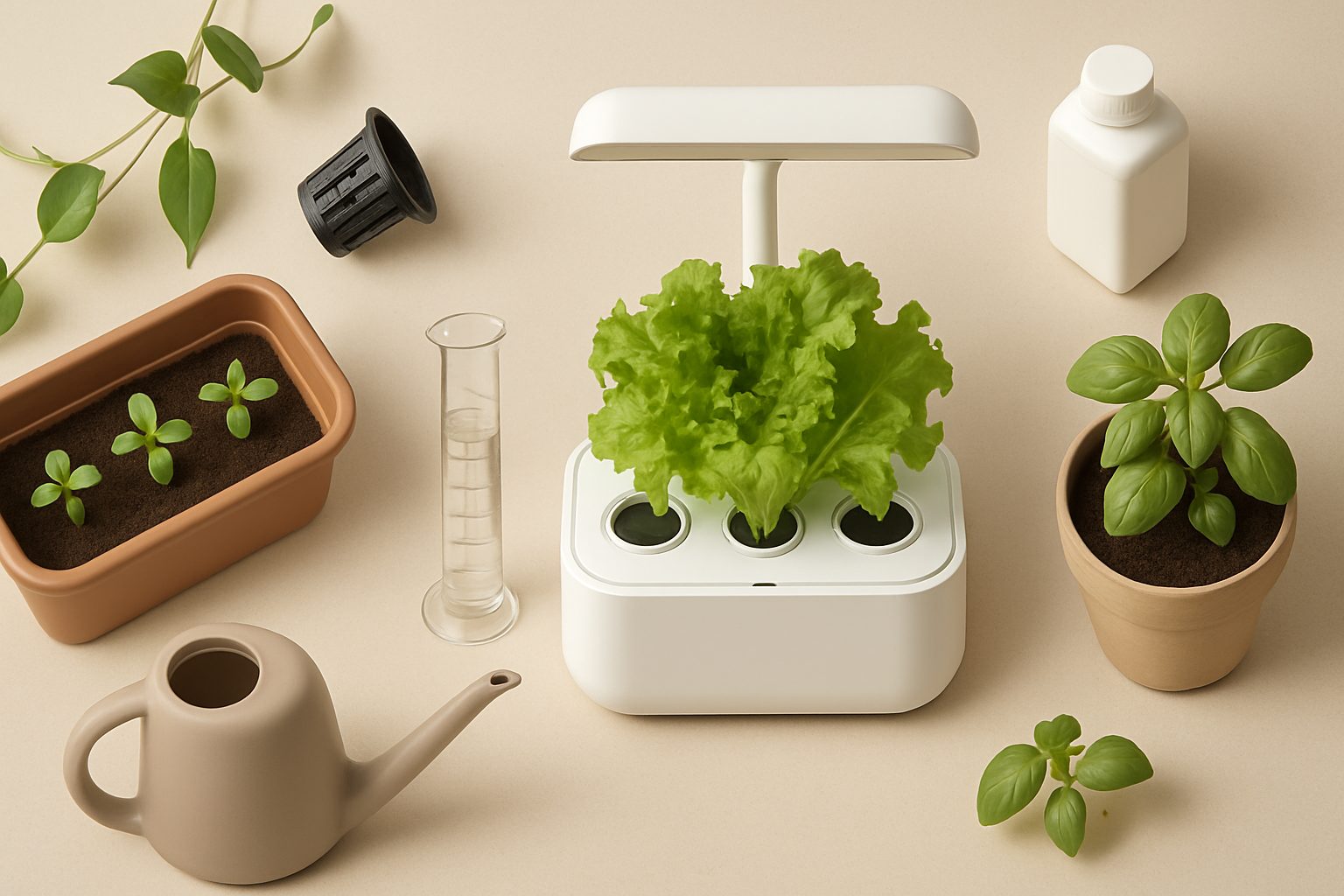
Best Countertop Hydroponic Systems UK (2025): Compact Units for Kitchens and Flats
Growing fresh herbs and salad leaves indoors has become genuinely practical for UK flats and kitchens over the last few years, thanks to plug-in hydroponic systems that don't require greenhouses or outdoor space. If you've been curious but put off by the setup complexity of traditional hydroponics, countertop units handle most of the legwork for you—lights, nutrient dosing, and water circulation all built in.
The catch is that most systems sold in the UK market come with real trade-offs: some are genuinely clever, others are overpriced, and a few aren't really designed for British growing conditions or power supply quirks. This guide walks through what's actually available, what works in practice, and where the honest gaps are.
What matters in a countertop hydroponic system
Footprint and noise are the two practical constraints in a flat kitchen. A system that needs 1.2m of counter space is a deal-breaker for most people; a pump that sounds like a small fan running constantly is usually dealbreaker number two. Seed pod availability in the UK is worth checking before buying—some systems rely on proprietary refills that take three weeks to ship from the US.
Most plug-in systems use either a deep-water culture setup (roots sit in nutrient solution) or a nutrient film technique where liquid trickles across a growing channel. For kitchen counters, you're almost always looking at the former, because it's quieter and spills less.
The systems worth considering
Click and Grow Smart Garden is the most straightforward option available in the UK. The 9-pod version measures roughly 30cm × 30cm and runs on a standard plug. The pump is effectively silent—it's a piezo electric element rather than a motor—and the system uses replaceable "grow cartridges" that are readily available through UK retailers (Amazon, Lakeland, garden centres). Set-up is genuinely simple: fill the water reservoir, drop in cartridges, plug in. The light adjusts height automatically as plants grow.
The downside is cost. A starter kit runs £200–250, and cartridges are around £3–4 each, so growing a season's worth of basil gets expensive compared to buying a plant. For someone testing the waters (pun intended), it's the least demanding entry point.
Lettuce Grow Farmstand units are available in the UK through specialist suppliers, though often with longer lead times. The smaller 12-pod model takes up roughly 60cm × 30cm and uses a tower design that's visually appealing in an open kitchen. It's louder than Click and Grow—there's an actual pump running every few hours—but the noise is brief and not constant. Seed pods (they call them "Farmstand Plugs") are available in the UK, though stocks vary. Footprint is larger, cost is higher (around £350–450), but you get roughly twice the growing capacity.
Budget systems on Amazon UK (often unbranded or sold under house names) typically cost £50–150 and come in 12- or 24-pod configurations. Most use cheap submersible pumps that run constantly, making them noticeably louder than the two above. Build quality varies wildly—some buyers report good results, others find motors failing after a few months. The real problem is seed pods: most of these systems either use no standardised pods (you're starting seeds from scratch in rockwool, which is fiddly) or expect you to source replacements from AliExpress with weeks of waiting. Fine if you enjoy troubleshooting; painful if you just want fresh parsley.
Real-world comparisons
| System | Footprint | Noise level | UK pod availability | Cost | |--------|-----------|-------------|---------------------|------| | Click and Grow 9 | 30×30cm | Very quiet | Excellent | £200–250 | | Lettuce Grow Farmstand (12) | 60×30cm | Moderate | Good | £350–450 | | Budget Amazon systems | 50×50cm+ | Loud | Poor | £50–150 |
What actually grows well
Leafy greens and herbs are your bread and butter. Lettuce, spinach, basil, parsley, mint, and coriander all thrive in countertop units. Tomatoes and peppers theoretically work but need significantly stronger lights than most plug-in systems provide—they'll grow leggy and produce little.
The UK's lack of natural winter daylight means most systems need to run their lights 12–14 hours daily from September through March. Factor in electricity costs (roughly 15–25p per month for Click and Grow, more for budget systems with inefficient LEDs) and the value proposition shifts depending on what you'd normally buy.
Real costs and realistic expectations
Don't expect to grow a family's full salad needs year-round on a countertop unit. They're genuinely useful for fresh herbs—having basil or coriander on-demand is real—and they're good for growing a rotation of salad leaves to supplement supermarket shopping. But the maths don't work out if you're trying to save money. You're paying for convenience and novelty.
Initial investment (system) plus running costs (electricity, nutrients, occasional seed pods) typically settle at around £250–400 per year for a serious user. That's not cheap, but it's less than a restaurant habit, and if you actually use the herbs you grow, the value isn't purely financial.
Should you buy one?
If you want fresh herbs on a kitchen shelf without faffing about with soil, watering schedules, or window sill space, a Click and Grow is the lowest-friction option in the UK right now. If you have more counter space and patience for slightly higher maintenance, Lettuce Grow's systems grow more per square metre. Avoid the unbranded budget systems unless you're genuinely comfortable with sourcing parts and fixing pumps.
For smaller flats where space is genuinely precious, explore our guide to hydroponics in small spaces to see other approaches—vertical systems, wall-mounted units, or hybrid soil-and-hydro setups that might suit your layout better.
More options
- Home Hydroponic Systems (Amazon UK) (Amazon UK)
- Full-Spectrum LED Grow Lights (Amazon UK) (Amazon UK)
- Hydroponic Nutrients & Fertilisers (Amazon UK) (Amazon UK)
- Complete Grow Tent Kits (Amazon UK) (Amazon UK)
- Hydroponic Air Pumps & Air Stones (Amazon UK) (Amazon UK)